Hands-On BASIC: On Loving Computers and Reading

I recently read W. Patrick McCray’s excellent book README: A Bookish History of Computing from Electronic Brains to Everything Machines (2025), and its central thesis that the history of computing is bound up in books resonated, because the origins of my love of computers and my love of books are likewise intertwined.
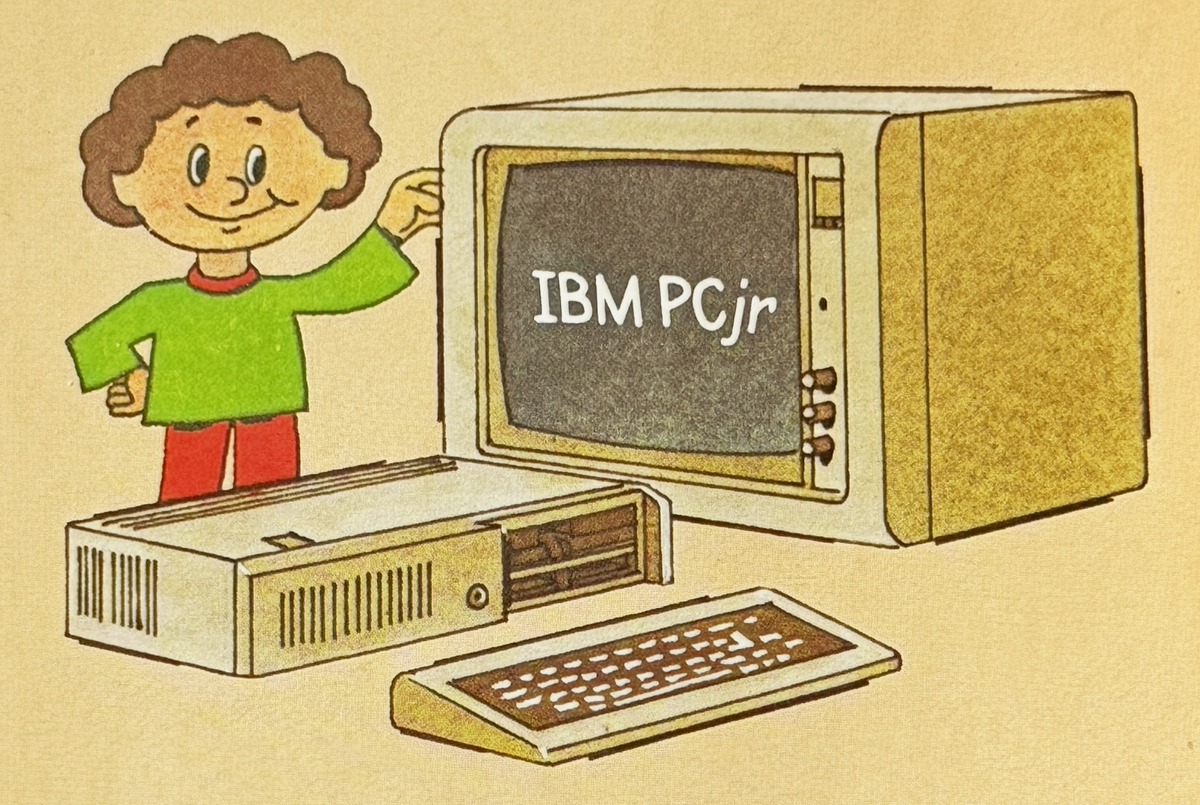
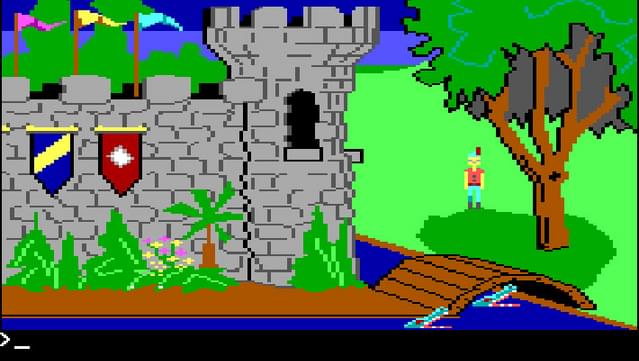
Some time around 1985, my family acquired an IBM PCjr, now a famously failed product that nevertheless offered me my first meaningful experiences with computers. I was only 3 or 4 when it showed up at our house, and my older brothers were the primary users. At first, I was merely a witness. I have vague memories about some incident involving peanut butter in the keyboard, and in the couple years after that my older brothers introduced me and my sister to some computer games: the wonderful [Pinball Construction Set] (https://en.wikipedia.org/wiki/Pinball_Construction_Set) and especially King’s Quest. I loved that game, which combined text-driven commands similar to an old-school interactive fiction with color graphics and movement.
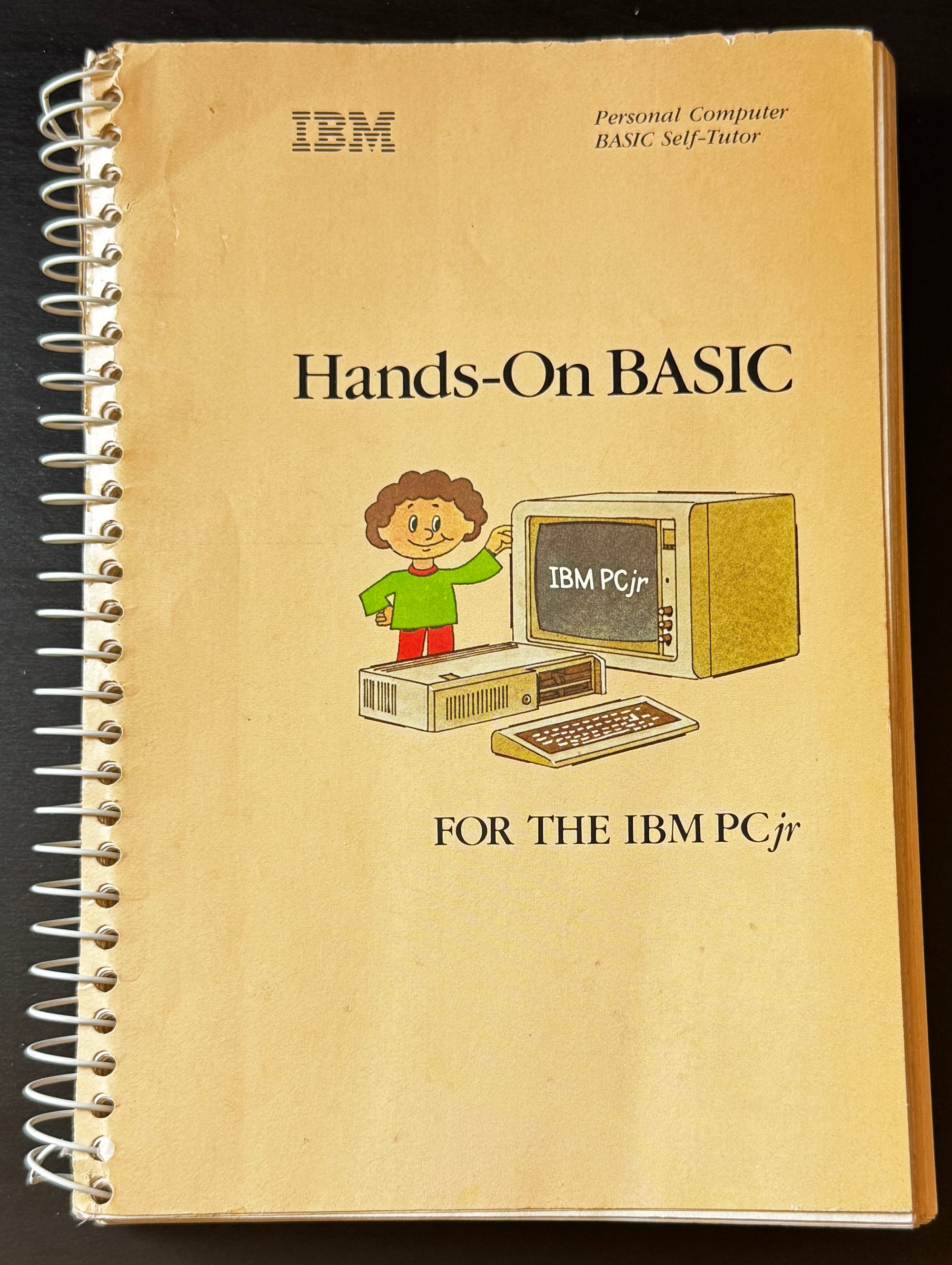
I must have been 8 or 9 by the time I pulled one of the manuals that came with the PCjr off the shelf and discovered Arthur Luehrmann and Herbert Peckham’s Hands-On BASIC for the IBM PCjr (1983), a book that was included with the PCjr alongside more overtly serious-looking technical manuals. The cartoon boy on the cover seemed inviting, and while at that age the book must have pushed the bounds of my vocabulary, it nevertheless invited me to play with the computer in a different, more open-ended way. The games had offered a pleasurable kind of freedom—I could create a virtual pinball game configured however I wanted, I could explore a fantasy landscape via graphics that responded to text commands—but the manual promised to empower me to navigate an even more open field of possibilities.
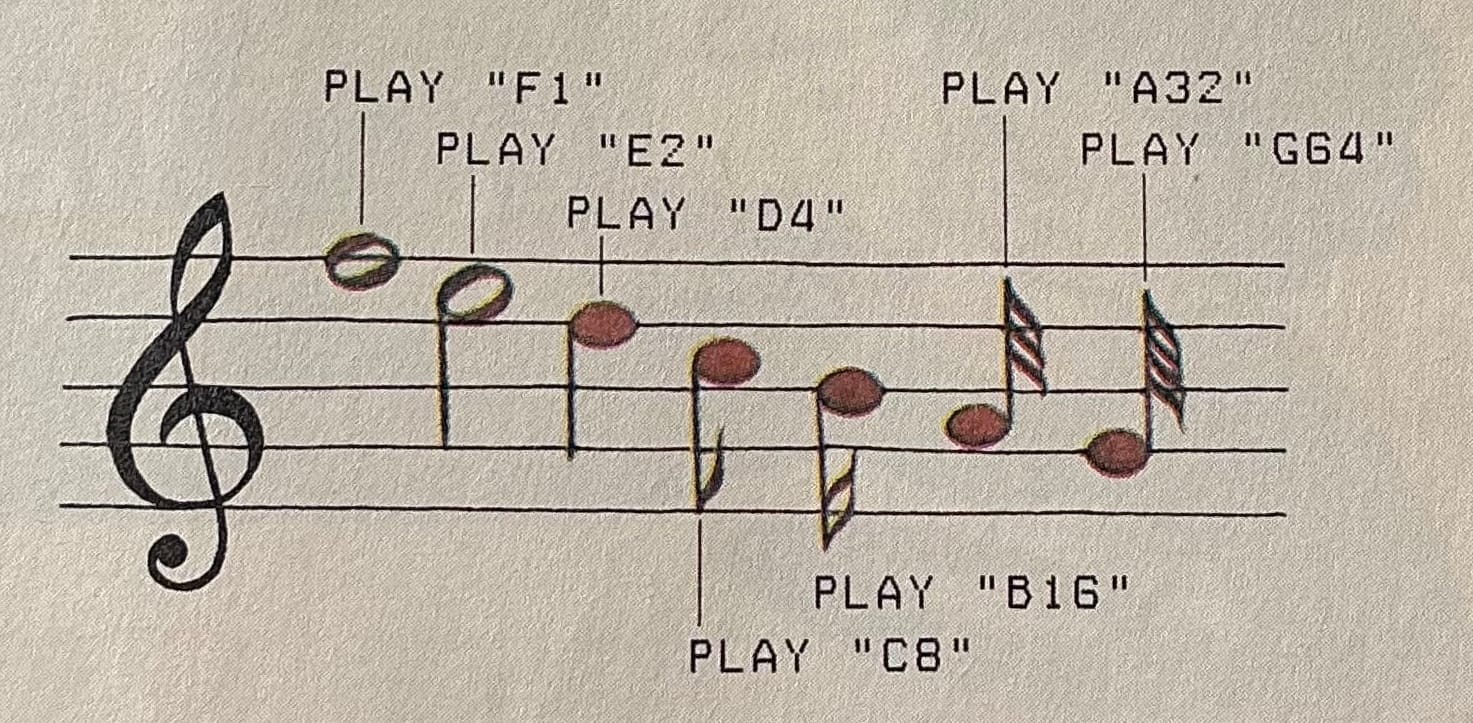
The spiral-bound text walked me through the basics of “Telling the Computer to Do Things” (27)—I could make it BEEP by typing BEEP, and I could make it produce different sounds by feeding it initially unexplained parameters—SOUND 440, 10, SOUND 523, 10. I drew overlapping colored squares on the screen using numbers, and I wrote basic/BASIC code to create pentagons and stars. Eventually, the text walked me through creating and calling subroutines to represent individual notes, building up to more elaborate and repurposable music programs that could play “Mary Had a Little Lamb,” “Twinkle, Twinkle Little Star,” along with any sequence of notes I wanted. Along the way, I learned some useful basics of coding at the time: precision of syntax, proto-functions, variables, and more. The deep satisfaction that came from typing words and numbers onto the screen and seeing them transformed into sounds, images, and music was more than educational, though. It was joyful, and it gave me a sense of wonder—wonder both that this mysterious box of wires and circuits could do such a thing, and wonder that I as a kid could make it do that.
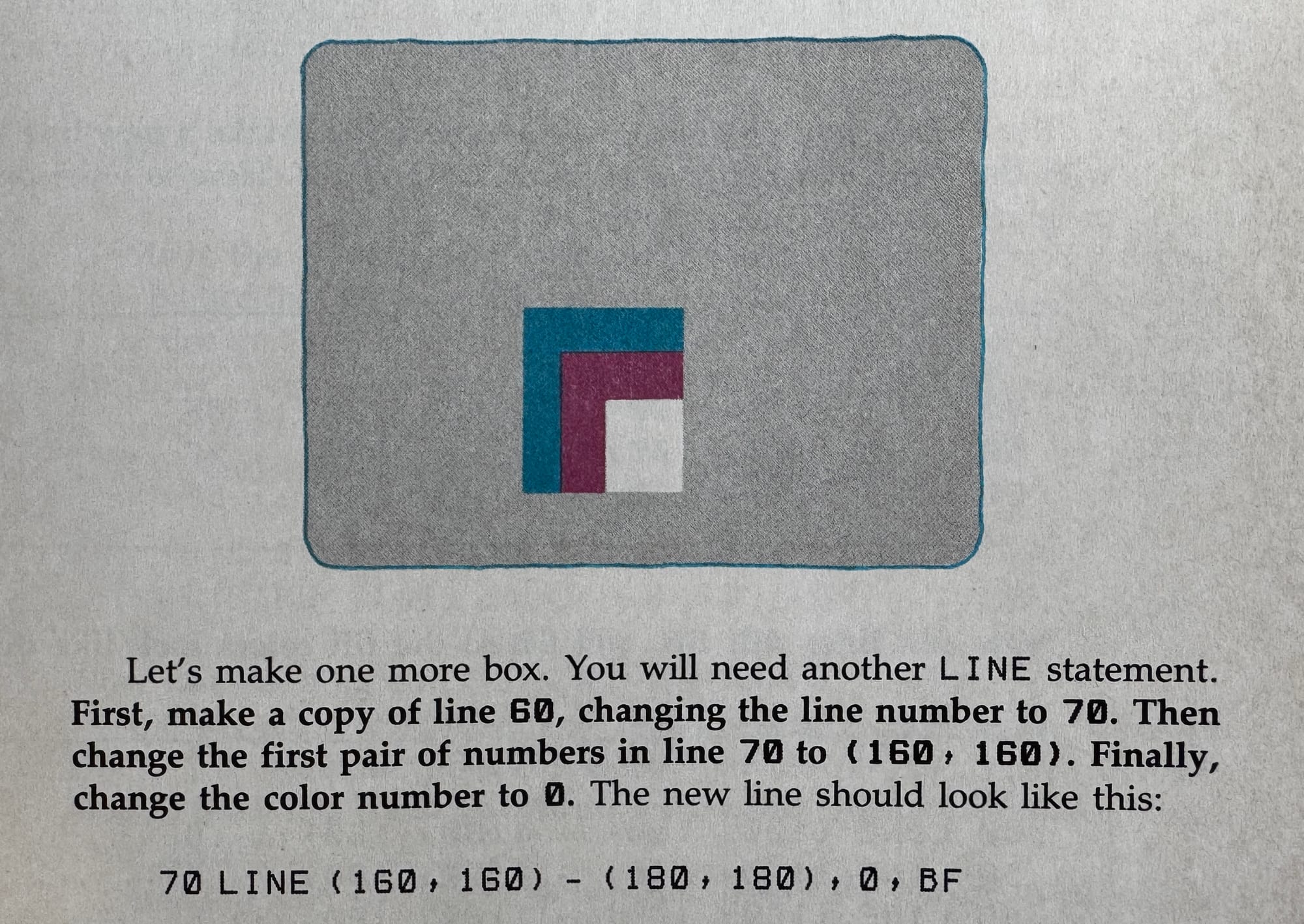
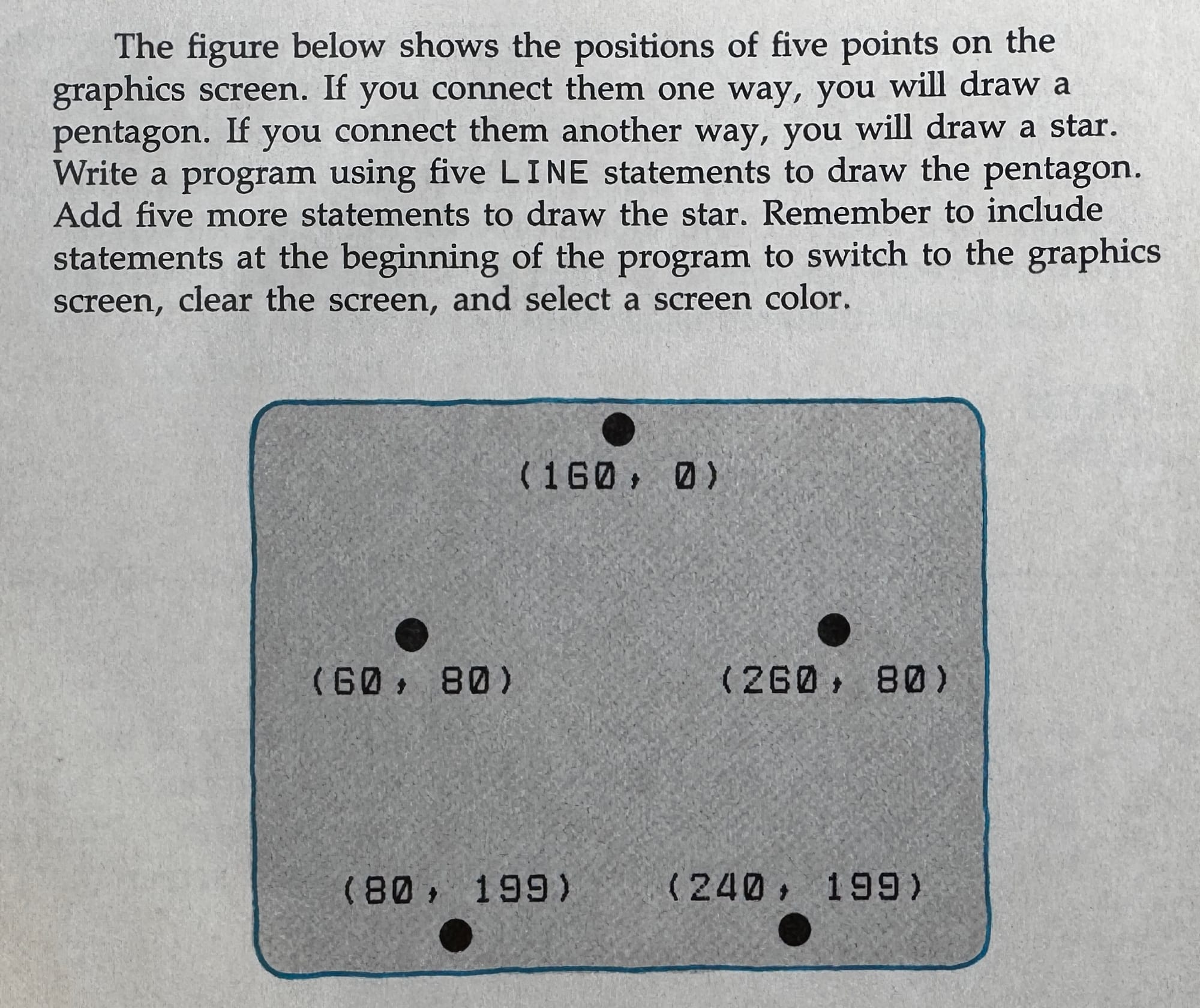
And while it wasn’t the goal of the text, I also learned other, more traditional skills and concepts beyond the computer technology: I surely hadn’t encountered coordinate systems in math class yet, but placing pixels at precise points on a screen taught me about them. The work with notes taught me some basic music theory and sound theory—440 was a frequency in hertz, it turned out, and the text walked me through scales of notes and the relative temporal values of Whole Notes through Sixty-fourth notes. And, of course, even as I was learning the very basics of computation, I was pushing my skills as a reader forward. Just as reading had revealed vast new possibilities for learning to me, so too did this book that was essentially published as marketing material to make a business computer look friendly for homes and schools.
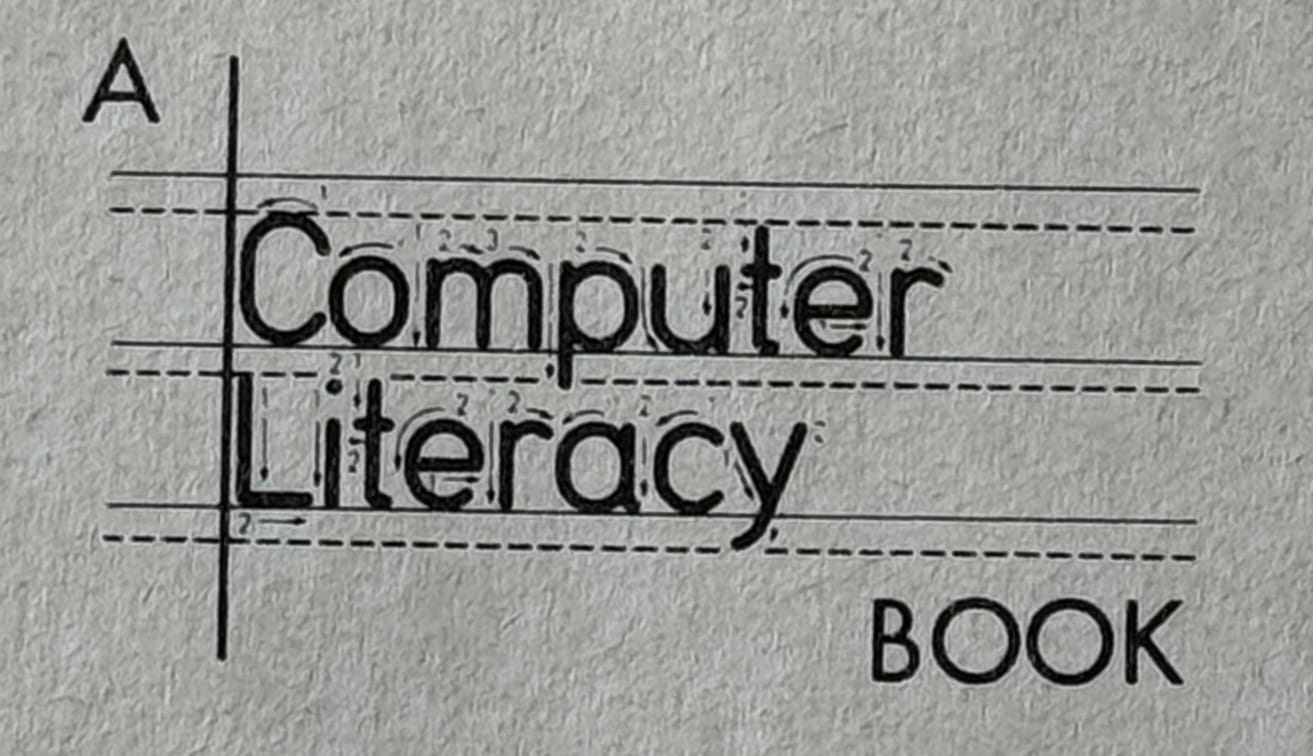
Hands-On BASIC For the IBM PCjr does not stand out as particularly notable in the history of books and computing; it’s a niche tome packaged with a computer remembered mostly for its commercial failure. But it turns out that Arthur Luehrmann is an important figure in the history of computer literacy—in fact, the book’s “About the Authors” page notes that “Dr. Luehrmann coined the phrase ‘computer literacy,’ and he has worked to promote the concept of computer literacy” (2). He co-founded the Computer Literacy partnership whose stamp appears on Hands-On BASIC’s title page1.
A talk that Luehrmann gave in 1972 offers a vision of computer literacy in relation to reading-and-writing literacy, and it asks a question that remains relevant to computers as part of education today: “Should the Computer Teach the Student, or Vice-Versa?” The talk offers a remarkable parable about the introduction of reading and writing to an imagined pre-literate society; at first, the society adopts writing as a mere instructional tool in a process Luehrmann describes as “Writing Assisted Instruction.” As WAI develops, though, students themselves begin to adopt reading and writing, and reading and writing eventually become central goals of schooling. Writing-Assisted Instruction eventually comes to seem retrograde by comparison.
What Luehrmann was then describing as “Computing Literacy” faced similar paths—mere Computer-Assisted Instruction (CAI), “a cost-effective delivery system for instruction,” or instead “a higher goal”:
If the computer is so powerful a resource that it can be programmed to simulate the instructional process, shouldn’t we be teaching our students mastery of this powerful intellectual too? Is it enough that a student be the subject of computer administered instruction—the end-user of a new technology? Or should his education also include learning to use the computer (1) to get information in the social sciences from a large database inquiry system, or (2) to simulate an ecological system, or (3) to solve problems by using algorithms, or (4) to acquire laboratory data and analyze it, or (5) to represent textual information for editing and analysis, or (6) to represent musical information for analysis, or (7) to create and process graphical information? These uses of computers in education cause students to become masters of computing, not merely its subjects.
The ongoing parent and teacher revolts against not just smartphones but also computers in education—at an April 2026 University Lab High School Symposium on AI in education, I witnessed a ballroom of educators hoot and cheer at a UIUC philosopher’s assertion that including computers in the classroom was the worst mistake schools had ever made—seem largely to be focused on what Luehrmann would call Computer-Assisted Instruction2. Luehrmann’s vision of computer literacy focuses first on programming but crosses disciplines; it doesn’t sequester the computers away in a Computer Science classroom but notices their applicability to more culturally oriented disciplines, as well. Most of all, though, Luehrmann imagines students empowered by technology, rather than subject to it. That sense of empowerment is what I felt when I was working my way through Hands-On BASIC, and it’s the sense of empowerment we should be trying to offer students today.
Viewed suspiciously, of course, my encounter with Hands-On BASIC might not be the joyful childhood story I’m making it out to be. The IBM logo looms in the upper-left of the cover, a corporate master potentially seeking to make a subject of me. The screen fashioned to look like a blackboard with “IBM PCjr” in chalk-like letters might point to a classroom-replacing logic more suggestive of CAI. The label that describes the book as a “Personal Computer BASIC Self-Tutor” might point to the same fantasies of automated education that characterize CAI. The grinning cartoon boy alongside the machine might be read as a cynical ploy to hook ‘em young—and that image that made the book look inviting to a child certainly hooked me. The title of the book’s first part, “TAKING CONTROL,” might point to nascent power fantasies of tech bros headed toward a technofeudal future.
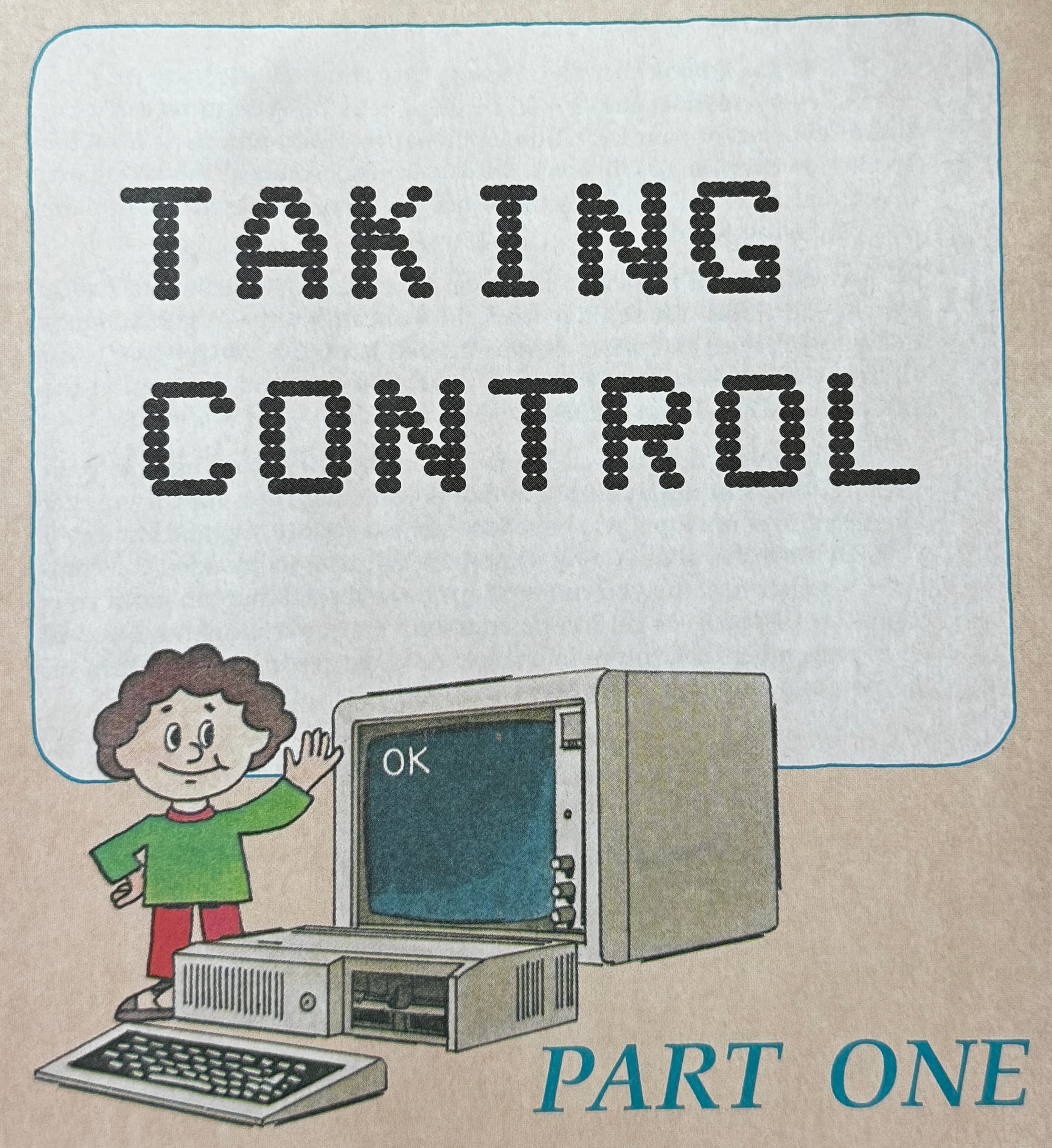
But at the time, I felt the positive sense of empowerment for which Luehrmann advocates, and my encounter with the book established a sense of myself as an empowered computer user and a reader who could extend his own capacities with books and computers alike. I did so in part because of the wonder Hands-On BASIC made possible for me. Computers have been the dominant substrate of culture for the last 25 years, and schools should be encouraging and facilitating encounters similar to the one I had rather than longing for some prelapsarian digital-free space.
1 The About the Authors page notes that Arthur Luehrmann and Herbert Peckham, “Together with Martha Ramirez... formed the partnership Computer Literacy to develop educational materials for use with computers” (2)
2 A recent NBC News piece describes parental backlash against the personalized learning online education platform i-Ready, for example, and Claire Potter, among others, has issued a call to “Kill Canvas. Now” in the wake of a recent shutdown due to a data breach and ransom. Computer-Assisted Instruction looks like the “Teaching Machines” Audrey Waters explores in her book of the same name, and like the universal AI tutors Salman Khan has been championing for the last three years.