Why "Teaching the Internet"?

In a January 2016 interview on the Hard Fork podcast, Jonathan Haidt makes a striking assertion about the potential effects of the smartphone and social media bans he’s been promoting for the last several years. Hard Fork co-host Casey Newton, who elsewhere in the interview notes that he has over time “become more sympathetic to [Haidt’s] point of view” about the effects of smartphones and social media on children, notes that his nephew finds joy in exploring interests including gymnastics and cooking on Instagram. Haidt’s response seeks at once to distinguish social media from the internet at large and to argue that basically nothing would be lost in the various bans he champions:
you’ve got to separate the internet from social media. Social media is a part of the internet. It’s one of the worst parts. It’s the one that’s hurting kids the most.
But look, ...we’re all old enough to remember the ‘90s when we first got a look at the internet. It was amazing. And, if you’re LGBTQ in rural areas, suddenly you can find information. You can find people. I mean, it was amazing the way it brought people together. So I would never take that away. I would never say kids shouldn’t be on the internet.
So do they also need platforms that use algorithms to force feed them whatever content was most upvoted by people based on the extremity of its emotions or expressions? Does your nephew benefit from having Instagram pick what he sees, as opposed to having him type in what he’s looking for? If you take away social media from kids, I don’t see any loss.
The absurdity of claiming that if we simply cut out the social media we’d be left with the uncomplicated, purer 1990s internet aside, I can’t but help feel deeply alarmed by the cultural obliteration implicit in the claim that there wouldn’t be “any loss” under Haidt’s increasingly successful empire of banning. For the last 25 years, young people have been active consumers and creators of the culture of the internet, and surely something significant would be lost if all that culture suddenly disappeared.
In all the omnipresent hubbub since Haidt published The Anxious Generation in 2024, there have been supporters and detractors, but the detractors generally focus on Haidt’s questionable causal claims about smartphones and teen mental health or on the potential practical benefits of technology in schools1. Rarely do even the greatest skeptics of Haidt defend young peoples’ engagement with the internet on cultural grounds.
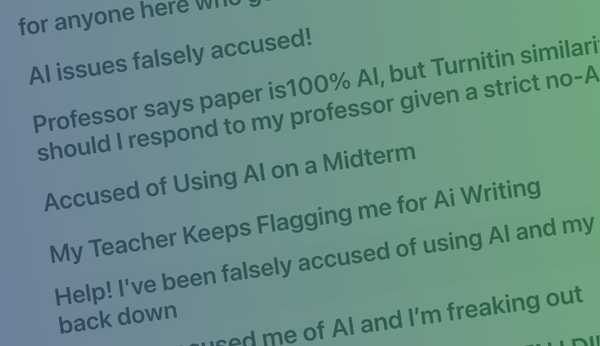
How could anyone reasonably do so? The culture of the internet found Oxford University Press proclaiming “brain rot” the word of the year for 2024. Brain rot sure sounds bad for kids. An army of youth ritualistically chanted “6 7” at parents and teachers through the better part of 2025. Since early in YouTube’s existence we’ve born witness to children enthusiastically unboxing toys they’ve seen on television commercials as zombified consumers. We continue to live in a period of pronounced political chaos after a 2016 election in which the comic character, meme, and eventual hate symbol Pepe the Frog played a prominent role, and since November 2022 teachers in high schools and colleges alike have puzzled over flattened essays that are partly or fully generated by ChatGPT.
And yet. In 25 years of online youth culture, young people have made joyful contact with people outside their own communities and created virtual communities in the process. They’ve invented new genres of storytelling on YouTube, they’ve participated in collaborative art on Reddit, they’ve extended fictional universes on WattPad, they’ve documented and preserved video games corporations would have let disappear, they’ve playfully transformed the English language, they’ve joyfully danced on TikTok.
All that active cultural participation and play has meant a lot to my students, who have been telling me about their experiences informally for the last 21 years and writing about them for the last eight years in a high school elective class about the intersections of computing and culture. I’m currently finishing up the last iteration of a Digital Literary Studies course I’ve been teaching for some time now, whose initial emphasis on the Digital Humanities eventually shifted toward an emphasis on digital culture.
My attempt to write more actively in public is inspired in part by my reflections on what that class has meant to me and to my students. I ran Digital Literary Studies pretty differently than I’ve run any other English class, I’ve learned a lot in the process, and I want others to learn about what I’ve learned.
The humanities find themselves at an odd moment as major enrollments have declined and the challenges of new digital technology have inspired a new scholarly monasticism that retreats to book page, pen, and paper. Across the political spectrum, in academia and in the culture at large, in both K-12 schools and in universities, I see widespread nostalgia for some less complicated version of English from the past, for some less complicated version of education from the past. I’m hopeful my voice can add some alternative ways to think about technology in schools, in English classrooms, and in our students’ lives more in tune with the present and more curious about the future.
I’m Eric Rettberg, and I’ve been teaching for 21 years, first at the college level for 11 years and now at the high school level for 10. I’m an English teacher at the Illinois Mathematics and Science Academy, an institution that serves high school students but falls under the state’s board of higher education. After my Ph.D. training as a modernist and digital humanist at the University of Virginia, my perspectives were shaped by my time as a Brittain Fellow at the Georgia Institute of Technology, where I became committed to multimodal composition and to developing students’ “humanistic perspectives in a technological world.” By sharing my perspectives and experiences in “Teaching the Internet,” I hope to become a part of larger conversations about what English can be, about how technology shapes education, and about how we can make education more joyful, interesting, relevant, and useful for students. I look forward adding my voice to the mix in the months and years ahead.
1 Questions of causation continue to dog Haidt’s extremely popular and influential pseudo-scientific work, and in the Hard Fork interview, I notice the way he pivots quickly from broad claims about causation to moral-panic talking points:
Casey Newton: “So when you say the evidence for causality is overwhelming, break that down for us a little bit. What is your understanding of the mechanisms by which social media is harmful to children?”
Haidt: ”Yes, so Arturo Bejar, a whistleblower, brought out this survey that Meta did — the bad experiences and encounters framework. So Meta itself, they’ve done tons of research. They collected, what are kids saying? What’s happening to them?
What they found is, let’s see. They get very high rates of sexual harassment, around 15 percent, each week. Each week they have some person approaching you sexually. So they got a lot of that. Let’s see, what else do they have here?
They get bullying. They see violence. They see hardcore porn. Oh, the biggest, clearest one, I think, actually is sextortion. That’s the one that just stands out like a sore thumb.
Kids, if you’re on social media, you can get sextorted. If you’re not, you can’t really. And the kids who get sextorted are deeply shamed. They shared a picture of themselves — these teenage boys usually — and then their lives are ruined and some of them commit suicide.”
To be clear, this all sounds highly concerning, but there’s a lot more to young people’s experience of the internet than the parade of horribles trotted out here in place of a genuine breakdown of “the evidence for causality.”